Who Are You When You No Longer Have to Be Anyone?

Why your True Self does not have to play a role.
We spend a large part of our lives trying to be someone.
We are our parents' children.
We are partners, friends, parents, colleagues or managers.
We are successful, helpful, reliable, strong, independent or particularly understanding.
We take responsibility.
We meet expectations.
We develop abilities.
We try to find our place in life.
And eventually, we may have developed a fairly clear idea of who we are.
But have you ever asked yourself whether you really are everything you think you are?
Or whether you might be much more than the story you tell yourself about who you are?
Who are you when you no longer have to be anyone?
At first, this question may feel unsettling.
Because we are accustomed to describing our identity through something.
Our name.
Our age.
Our profession.
Our relationships.
Our past.
Our beliefs.
Yet all these things can change.
So what remains of you?

When Your Roles Become Your Identity
Every human being takes on different roles throughout life.
That is perfectly natural.
We need these roles in order to live together and fulfil our responsibilities.
A doctor treats patients.
A teacher teaches pupils.
Parents care for their children.
A business owner runs a business.
A friend is there for another friend.
There is nothing wrong with any of this.
It only becomes difficult when we begin to make our entire sense of worth dependent on these roles.
Then unconscious beliefs may develop:
I am only valuable when I am needed.
I am only lovable when I please others.
I am only successful when I achieve something.
I am only strong when I show no weakness.
I am only somebody when others recognise me.
And suddenly a responsibility becomes an identity.
An ability becomes an obligation.
A role becomes an inner prison.
We believe we must always be the person we think we are.
You are not the role you play in life. You are the awareness that makes it possible for you to recognise that role in the first place.

The Story You Tell Yourself About Who You Are
Perhaps you have noticed how often we explain ourselves.
That's just the way I am.
I've always been like that.
It's because of my past.
That's my character.
That's simply who I am.
With statements like these, we describe our personality.
But sometimes we also use them to define ourselves according to certain characteristics.
We tell ourselves a story about who we are.
And eventually, we begin to mistake that story for our entire reality.
Perhaps you used to be a very shy person.
Perhaps you spent a long time seeing yourself as a victim of certain circumstances.
Perhaps you were always the one who had to hold everything together.
Perhaps you defined yourself through your professional success.
Or through your ability to help other people.
All these experiences belong to your life story.
But they do not have to determine forever who you are today.
Your past may explain certain things about you. But it does not have to define your future.

The Ego Needs a Self-Image
In spiritual psychology, we often speak about the ego.
The ego, however, is not fundamentally something bad.
Nor is it an enemy that we have to fight.
It is part of our human personality and helps us find our way in the world.
It distinguishes between me and you.
It develops preferences.
It evaluates experiences.
It seeks security.
It tries to maintain our identity.
But the ego can become so strongly identified with its self-image that every change feels like a threat.
When someone criticises us, we feel personally attacked.
When we fail, we may believe that we have failed as human beings.
When we are no longer needed, we feel insignificant.
When someone does not recognise us, we begin to doubt our worth.
Yet something is being confused here.
What you think about yourself is not necessarily what you are.
A thought about yourself is, first of all, simply a thought.
A judgement about yourself is, first of all, simply a judgement.
And even your own idea of who you are is not the entirety of your being.

Who Are You Without Recognition?
Perhaps this is one of the most uncomfortable questions.
Who are you when nobody admires you?
When nobody praises you?
When nobody needs your help?
When you are not achieving anything special?
When you have no success to demonstrate?
When you have nothing to prove to anyone?
Perhaps a feeling of emptiness arises at first.
Because if our self-worth has depended on external approval for a long time, the absence of that approval can feel unsettling.
But perhaps this is precisely where a wonderful opportunity lies.
You can begin to discover that your worth does not come into existence only through the recognition of other people.
A person does not lose their dignity when they give up their profession.
A person does not lose their significance when their children grow up.
A person does not lose their worth when a relationship ends.
And a person does not become less lovable when they are temporarily unable to achieve anything.
Your worth does not begin with your achievements, and it does not end with your importance to others.

You Don't Always Have to Be the Strong One
Perhaps you have experienced yourself as a strong person for many years.
You were there for others.
You solved problems.
You took responsibility.
You persevered.
And perhaps other people became accustomed to the fact that you always managed to keep going.
But what happens when you need help yourself?
When you feel sad?
When you don't know what to do next?
When you want to withdraw for a while?
Perhaps an inner conflict arises.
Because your self-image says:
But I'm the strong one.
While your human nature says:
Right now, I need support myself.
If you identify exclusively with the role of the strong person, accepting your own vulnerability can become difficult.
Yet vulnerability does not contradict your strength.
It is part of being human.
You are allowed to be strong.
And you are allowed to be weak.
You are allowed to help.
And you are allowed to receive help.
You are allowed to carry responsibility.
And occasionally, you are allowed to put it down.
You don't always have to remain the same person simply so that others don't have to adjust.

Even the Helper Is Allowed Simply to Be Human
Some people have devoted their lives to helping others.
They advise.
They support.
They comfort.
They accompany.
They take responsibility for people who are going through difficult times.
This can be a wonderful calling.
But sometimes an unconscious identification develops:
I am the one who helps.
And then it becomes difficult to have needs of your own.
Perhaps you even begin to feel that you are only valuable when you are useful to others.
But love is not a service through which you have to earn your right to exist.
You are allowed to help others because you want to.
Not because you would otherwise be nobody.
You are allowed to use your abilities without having to define yourself through them.
And you are allowed to experience a day when you help nobody and still have every right simply to be here.

You Are More Than Your Successes and Failures
Our society often measures people by their achievements.
Their income.
Their possessions.
Their appearance.
Their professional status.
Their fame.
Their successes.
And sometimes we adopt these standards without questioning them.
We begin comparing ourselves with others.
Who has achieved more?
Who is more successful?
Who looks better?
Who is more admired?
But if your self-worth depends on being better than someone else, your inner peace will always be at risk.
Because there will always be people who possess more.
Who are more successful.
Who are younger.
Who appear more beautiful.
Who receive more recognition.
And there will also be people who have less.
But your worth does not arise from this comparison.
You don't have to surpass anyone in order to be yourself.

You Are Allowed to Love Your Personality
Perhaps a misunderstanding could arise here.
When we speak about the True Self, it might seem as though we have to overcome or even eliminate our personality.
But that is not what this is about.
You are allowed to love your personality.
You are allowed to develop your talents.
You are allowed to be successful.
You are allowed to pursue goals.
You are allowed to be ambitious.
You are allowed to enjoy your profession.
You are allowed to shape your relationships.
You are allowed to enjoy your human qualities.
The personality is not our enemy.
It is the form through which we express ourselves in this world.
But perhaps we can learn to live it more consciously.
Without completely confusing ourselves with it.
You can play a role without forgetting that you are more than that role.
You can practise a profession without making your entire worth dependent on it.
You can love without losing yourself in a relationship.
You can be successful without turning success into your identity.
And you can change without believing that you are losing your essential nature.

The True Self Does Not Have to Become Anyone
Here we arrive at a deeper spiritual perspective.
In mysticism and various non-dual traditions, a distinction is made between our changing personality and a deeper dimension of our consciousness.
Our thoughts change.
Our feelings change.
Our beliefs change.
Our bodies change.
Our circumstances change.
Yet we can become aware of all these changes.
You notice your thoughts.
You feel your emotions.
You recognise that today you think differently about certain things than you did in the past.
And perhaps you can ask yourself:
What is it within me that is aware of all these changes?
Within our spiritual perspective, this brings us closer to what we call the True Self.
Not as a new personality.
Not as a particularly spiritual ego.
Not as a more perfect version of our previous identity.
But as a deeper experience of presence and awareness.
Something that does not first have to be created through achievement, recognition or external success.
Your True Self does not need applause. It does not have to impress anyone. It is allowed simply to be.

When Spirituality Itself Becomes a Role
Even on the spiritual path, we can become lost in new self-images.
Perhaps we want to be particularly conscious.
Particularly loving.
Particularly peaceful.
Particularly enlightened.
Perhaps we eventually believe that a spiritual person should no longer become angry.
Should no longer feel sad.
Should no longer doubt.
Should no longer make mistakes.
And suddenly we have created another role.
This time it is called:
I am a spiritual person.
But when we believe we must constantly live up to this ideal, pressure arises once again.
We may begin to fight our feelings.
We judge our human weaknesses.
We try always to appear loving, even when inwardly we may feel hurt or angry.
But the True Self does not have to play a spiritual role.
Consciousness does not mean that we are no longer allowed to have certain human experiences.
Rather, it means becoming increasingly able to meet them with clarity.
Perhaps spiritual maturity therefore does not consist of maintaining a perfect image of ourselves.
Perhaps it consists of having fewer and fewer images to defend.

You Are Allowed to Stop Constantly Improving Yourself
We live in a time when self-optimisation has become almost taken for granted.
We are supposed to become healthier.
More successful.
More attractive.
More productive.
More conscious.
More spiritual.
And even personal development can eventually become an endless project.
Another belief.
Another pattern.
Another shadow.
Another blockage.
Something else that needs to change.
But perhaps at some point we are allowed to ask ourselves:
What if I didn't have to become perfect before I could be at peace with myself?
That does not mean we should stop learning.
It does not mean we should ignore our mistakes.
And it certainly does not mean that we no longer have to take responsibility for our behaviour.
It simply means that we do not have to reject ourselves constantly in order to develop.
You can grow without first making yourself feel small.
You can learn without judging yourself for what you do not know.
You can change without hating your past.
And you can work on yourself without regarding yourself as fundamentally inadequate.
Perhaps true development does not begin with rejecting what you are, but with lovingly accepting your present reality.

Who Are You When Nobody Is Watching?
Perhaps this is a particularly beautiful question.
Who are you when nobody is watching you?
When nobody is evaluating your achievements?
When nobody is judging your words?
When nobody expects anything from you?
When you don't have to impress anyone?
Don't have to convince anyone?
Don't have to please anyone?
Perhaps you are sitting somewhere in nature.
Beside a lake.
In a forest.
By the sea.
Or perhaps you are looking up at the stars at night.
Nobody is demanding anything from you.
You don't have to fulfil a role.
You don't have to present yourself in any particular way.
You are simply here.
Perhaps then you experience a freedom that does not arise because you have achieved something.
But because, for a moment, you do not have to achieve anything.
Perhaps this is a small glimpse of your True Self.

The Freedom Simply to Be
Perhaps we have spent our entire lives wanting to become somebody.
And perhaps one day we discover that, in doing so, we have overlooked something essential.
That our humanity does not first have to be justified through achievement.
That we do not constantly have to prove who we are.
That we do not have to meet every expectation.
That we do not have to turn every judgement made by others into our own truth.
Perhaps genuine freedom arises where we stop feeling the need to defend our entire identity.
You are allowed to fulfil your roles.
You are allowed to take responsibility.
You are allowed to develop your personality.
But you are also allowed to return, again and again, to the quiet awareness in which all these experiences take place.
You don't have to stop being somebody. You are simply allowed to stop believing that this somebody is all you are.

A Small Encounter with Yourself
Perhaps you would like to take a few minutes for yourself today.
Sit down somewhere quiet.
Close your eyes, if you wish.
Breathe gently in and out.
And imagine that, for a moment, you are allowed to put down all your roles.
You do not have to think about your profession.
Not your age.
Not your successes.
Not your failures.
Not your past.
Not your future.
You don't have to please anyone.
You don't have to rescue anyone.
You don't have to prove anything.
You don't have to be particularly strong.
Or particularly clever.
Or particularly successful.
You don't even have to be particularly spiritual.
You are allowed simply to be here.
And then gently ask yourself a question:
Who am I when I no longer have to be anyone?
Perhaps no answer comes at first.
Perhaps thoughts arise.
Perhaps feelings.
Perhaps simply stillness.
You do not have to force anything.
You do not have to have a special experience.
Perhaps it is already enough, for a moment, simply to notice that you are here.
Without having to achieve anything.
Without having to present yourself in any particular way.
Without having to become someone else.

Perhaps You Are Already Enough
Perhaps one of the deepest realisations of our lives is that we do not constantly have to create a new identity in order to find peace.
Perhaps we can learn to love our personality without losing ourselves in it.
To accept our past without holding on to it.
To use our abilities without making our worth dependent on them.
To enjoy our relationships without defining ourselves exclusively through them.
And to live our spiritual development without turning it into another demand for achievement.
Perhaps you are much more than everything you have thought about yourself until now.
And perhaps you do not have to create that something more.
Perhaps you can begin to discover it in the stillness of your own awareness.
Because ultimately, perhaps it is not about becoming a different person at all.
Perhaps it is about increasingly recognising that you are not merely what you believe you have to be.
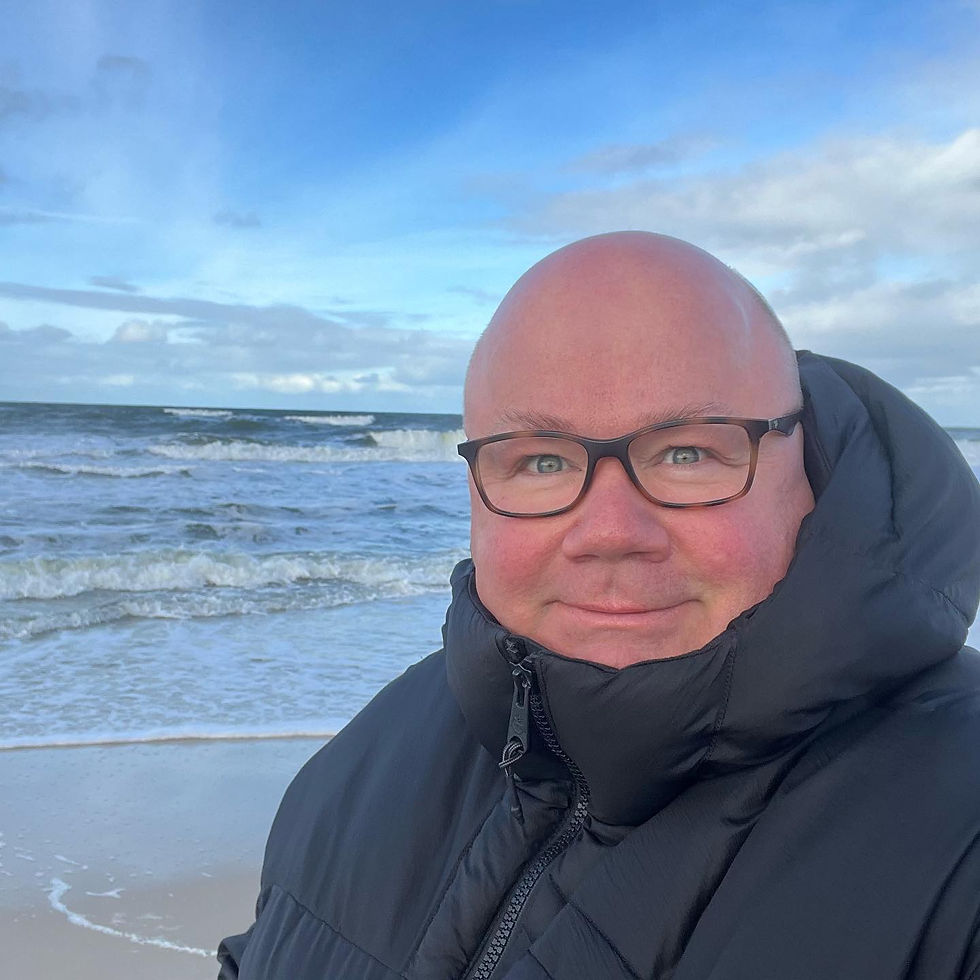
You don't have to become somebody in order to be somebody. Perhaps you are finally allowed to discover who you have always been.
With warm regards,
Marc Altmann


Comments