You Don’t Have to Wait for the Next Problem

Why peace does not have to be the warning sign of another crisis.
There are times in life when everything seems to happen at once.
One problem follows another.
No sooner have you resolved one thing than the next decision is already waiting for you.
You take care of things.
You organise.
You solve.
You help.
You think ahead.
You keep going.
And eventually, you become so good at dealing with difficulties that you almost forget what life feels like when, for once, there is nothing that needs to be dealt with.
Then something strange happens.
Things become quiet.
A conflict is resolved.
A worry disappears.
A difficult period lies behind you.
Perhaps you are even doing really well.
And suddenly a thought appears:
This can’t possibly last.
Perhaps you know this feeling.
There is actually no problem at all.
But your mind is already searching for the next one.

When We Become Accustomed to Problems
Human beings can become accustomed to an astonishing number of things.
Even tension.
Even worry.
Even constantly having to react to something.
If your life has been shaped by challenges for a long time, an inner attitude can develop:
I have to stay alert.
You observe.
You analyse.
You try to anticipate what might happen.
You want to be prepared.
At first, this is understandable.
When we have been through difficult experiences, we often try to recognise future difficulties earlier.
We do not want to be caught off guard again.
But at some point, sensible caution can turn into a permanent expectation:
Something is bound to happen.
And then it becomes difficult to truly trust a peaceful moment.
Perhaps peace is not the pause between two problems. Perhaps peace is the place where you are allowed to learn how to live.

The Ego Loves to Be Busy
Our mind is a wonderful tool.
It can plan.
Analyse.
Organise.
Compare.
Decide.
Solve problems.
But precisely because of this, it can always find something to occupy itself with.
If there is no problem on the outside, it can create one on the inside.
Then the thinking begins:
What could happen?
What have I overlooked?
What does this mean?
Why did that person say that?
What if everything changes again?
And suddenly the peace is gone.
Not because anything has happened externally.
But because inwardly we are already living in a future that does not yet exist.
The ego does not necessarily need a problem.
But it often needs something to occupy itself with.
Stillness, on the other hand, demands nothing.
And that can feel unfamiliar.

When Stillness Allows Us to Meet Ourselves
In stillness, there are suddenly fewer distractions.
No conflict that needs our thoughts.
No crisis demanding our full attention.
No urgent task behind which we can hide.
And then we meet ourselves.
Perhaps only then do we realise how exhausted we actually are.
Perhaps a sadness appears for which there was no time before.
Perhaps we feel a longing.
Perhaps we realise that we do not even know what we would enjoy doing if there were nothing we had to do.
Stillness is therefore not always immediately comfortable.
But it can be honest.
It does not ask:
What do you have to do next?
Perhaps it asks:
Who are you when nothing is being demanded of you?

You Are Allowed to Have a Life Without Constant Drama
Sometimes we confuse intensity with feeling alive.
This is particularly true in relationships.
Arguments.
Reconciliation.
Closeness.
Withdrawal.
Jealousy.
Separation.
Coming back together.
All of these create powerful emotions.
And powerful emotions can make us feel particularly alive.
If we have known such dynamics for a long time, a peaceful relationship can suddenly seem almost boring.
Someone is reliable.
They stay in touch.
They say what they mean.
There are no constant power games.
No permanent uncertainty.
No emotional rollercoasters.
And perhaps part of us asks:
Where is the passion?
But perhaps passion is not what is missing.
Perhaps what is missing is simply the drama.
Not every kind of calm is boredom. Sometimes peace only feels unfamiliar because you have lived with drama for too long.
Love does not need a constant crisis in order to be alive.
Closeness does not have to hurt in order to be deep.
And a relationship does not have to keep you permanently uncertain in order to be meaningful.

Happiness Does Not Need a Disaster to Balance It Out
There is a curious belief that many people recognise:
Things are going too well.
Or:
If I allow myself to be too happy now, something bad is bound to happen.
Almost as if there were an invisible account somewhere.
Too much joy.
Too much happiness.
Too much peace.
And eventually life would have to send us the bill.
But happiness is not a debt.
Joy does not have to be balanced out.
A beautiful day does not create a claim for a bad one.
You do not have to limit your happiness as a precaution.
You do not have to laugh less so that fate will overlook you.
You do not have to hide your joy.
You don’t have to make your happiness smaller in order not to tempt fate.
Perhaps you are simply allowed to be well.

Caution Is Not the Same as Fear
Of course, this does not mean going through life naively.
We are allowed to prepare.
We are allowed to recognise risks.
We are allowed to set boundaries.
We are allowed to take responsibility.
Peace does not mean denying reality.
But there is a difference between awareness and constant alertness.
Awareness says:
I see what is actually happening.
Fear says:
I have to prepare myself for everything that might possibly happen.
One keeps us in the present.
The other pulls us into countless possible futures.
Perhaps trust therefore does not mean believing that nothing difficult will ever happen again.
That would be unrealistic.
Perhaps trust means:
If something happens, I will deal with it. But I don’t have to suffer from it today.

What Do You Do When There Is Nothing to Fight?
Perhaps you have fought a great deal in your life.
For recognition.
For love.
For security.
For your freedom.
For your livelihood.
For your family.
For yourself.
Perhaps that strength was necessary.
Perhaps it carried you through difficult times.
But an ability that gets you through a crisis does not automatically have to become your permanent way of living.
At some point, you are allowed to put down the sword.
Not because you have become weak.
But because there is no battle taking place.
And then a new question arises:
What do I do with my strength when I no longer need it for fighting?
Perhaps you can use it to create.
To love.
To travel.
To learn.
To play.
To write.
To dream.
To discover.
To enjoy.
Perhaps this is even a new stage of development:
No longer merely being strong enough to survive difficulties.
But being free enough to shape your life.

From Surviving to Living
There are times when survival is enough.
Then it is simply about getting through one day at a time.
Carrying on.
Not giving up.
That deserves respect.
But when a difficult period has passed, at some point we are allowed to recognise:
I am still in survival mode even though I am no longer in the place where I needed it.
Perhaps then we need a new inner permission.
You are allowed to live again.
Not merely function.
Not merely cope.
Not merely react.
Live.
Perhaps you have even forgotten what brings you joy.
Then you are allowed to rediscover it.
What interests you?
What makes you laugh?
Where do you feel alive?
What would you like to see?
What would you like to learn?
Whom would you like to meet?
What would you like to create?
At some point, you are allowed to stop merely surviving and discover what living feels like.

Peace Is Not Stagnation
Some people fear calm because they believe that nothing will happen anymore.
But peace does not mean stagnation.
An incredible amount can arise from peace.
Creativity.
Clarity.
Love.
New ideas.
Deep encounters.
Conscious decisions.
Perhaps what is genuinely new can even emerge more easily from inner calm than from constant struggle.
When we no longer have to react permanently to danger, energy becomes available.
And we can use that energy to create.
Perhaps peace is therefore not the end of your development.
Perhaps it is the ground on which another form of development can begin.
No longer from fear.
No longer from lack.
No longer from the feeling:
I have to fix something.
But from the question:
What wants to emerge through me?

You Don’t Always Have to Work on Yourself
Even personal development can become an endless task.
Another pattern to recognise.
Another belief to release.
Another shadow to work through.
Something else to heal.
Become even more conscious.
Become even more spiritual.
And eventually, we begin to treat ourselves like a renovation project that is never complete.
Of course, self-awareness is valuable.
But perhaps from time to time we are also allowed to remember:
You are not only here to work on yourself. You are also here to live your life.
Perhaps there is nothing to heal today.
Perhaps today there is simply a walk.
A conversation.
A good meal.
Music.
Nature.
An animal.
A sunset.
Someone you love.
Or an evening when you simply look up at the sky.
That too is life.
Perhaps especially so.

You Don’t Have to Live the Future in Advance
The next problem will come when it comes.
Because, of course, life will always bring new challenges.
But you do not have to create them in advance.
You do not have to feel tomorrow’s fear today.
You do not have to experience a possible loss while nothing has yet been lost.
You do not have to have an argument in your head that may never happen.
And you do not have to prepare yourself for every imaginable catastrophe.
If something happens tomorrow, tomorrow will be a different moment.
Then you will respond.
Then you will decide.
Then you will use your strength.
But today?
Perhaps today everything is simply all right.

Allow Yourself Peace
Perhaps you do not have to rescue anyone today.
Perhaps there is nothing to decide.
Nothing to repair.
Nothing to control.
Perhaps nobody is angry with you.
Perhaps no catastrophe is approaching.
Perhaps you have nothing to prove.
Then do not search for the next problem.
Breathe.
Look around you.
Feel your body.
Look at nature.
Listen to the sounds around you.
Perhaps the sun is shining.
Perhaps clouds are moving across the sky.
Perhaps tonight you will see the moon or the stars.
And perhaps, for a moment, you can allow yourself a thought that may feel surprisingly unfamiliar:
Perhaps everything is simply all right right now.
You do not have to hold on to this moment.
You do not have to guarantee that tomorrow will be the same.
You only have to be here.
Now.
And perhaps that is exactly what peace is.
Not the certainty that another storm will never come.
But the ability to enjoy the sunshine while it is here.
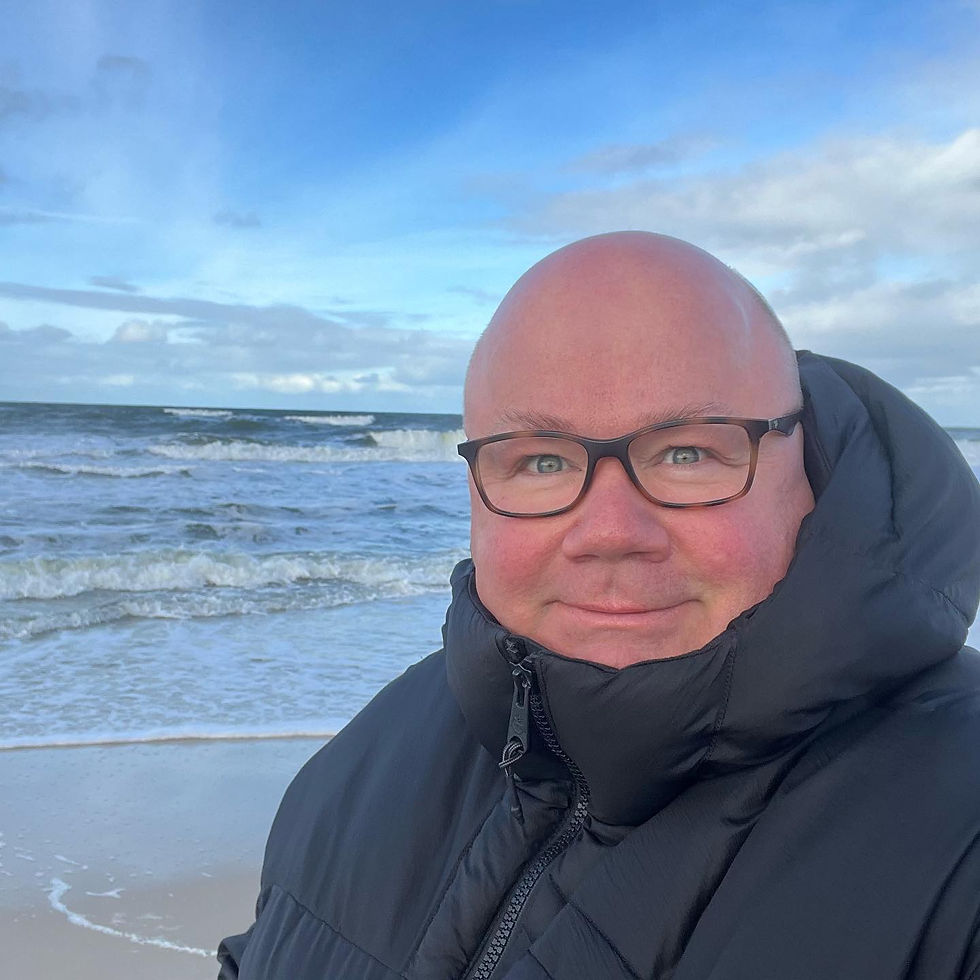
Perhaps peace begins where you stop expecting the next storm while everything is still calm.
With warm regards,
Marc Altmann


Comments